


Our team's approach to lived experience
Putting young people at the heart of their care.
At the Youth Mental Health and Technology team, we see lived and living experience as a form of expertise in its own right.
When we talk about lived experience, we mean young people and families who have real, first-hand experience of mental health challenges, seeking support, and navigating the mental health system. Their knowledge is essential, and it is valued alongside clinical, research, and technical expertise.
Young people with lived experience are partners and equals in our work from start to finish. This partnership shapes not just what we do, but how we do it. Rather than being consulted once or asked for feedback at the end of a research project, they are involved at multiple levels, helping decide what we research, how it is designed, how it is delivered, and how it is shared back with the community.
Partnering with young people with lived experience brings critical insight into what it is really like to seek help, make sense of care, and live with mental health challenges in everyday life. Embedding this expertise in our team and our program of research strengthens the relevance, accessibility, and integrity of our work, and helps ensure our research and innovations reflect what actually works for young people.
Our Lived Experience Principles
Accountability
Engagement approaches are accountable and mutual, keeping young people at the centre of decisions.
Integrity
Young people and their data are treated respectfully, using clear ethical guidelines and practices.
Accessibility
Engagement is accessible and inclusive, and young people’s diverse needs and experiences are accommodated.
Diversity
Recognising that young people are not homogenous, and their differences are their strength.
Transparency
Communication is honest and clear, so we can all participate in engagement processes as equals.

Want to learn more?
Check out our Lived Experience Framework developed by youth representatives of the National Youth Reference Group from the Brain and Mind Centre’s Right Care, First Time, Where You Live initiative.
This group of young people contributed their time and expertise to make this framework a reality and help to unpack the Lived Experience Principles in more detail.


Lived Experience Working Group
The Lived Experience Working Group (LEWG) was co-designed by Mr Samuel J Hockey and Dr Christine Song and established in 2021 within the Youth Mental Health and Technology Team. It was created to embed young people’s lived experience as an equal form of expertise across mental health research.
The LEWG is co-facilitated by Lived Experience Researcher and Program Lead Mr Samuel J Hockey and Clinical Researcher A/Prof Haley LaMonica, modelling partnership between lived and clinical expertise.
How the LEWG works
The LEWG is guided by a published, iterative protocol that integrates lived experience across all stages of the research cycle including governance, study design, evaluation, and dissemination.
The protocol prioritises:
- Power-sharing and shared decision-making
- Relationship-building and trust
- Clear roles and expectations
- Access to preparation and plain-language materials
- Flexible participation options
- Capability-building and recognition
This structure supports young people to contribute in ways that are informed, safe, and meaningful, while also always ensuring their input genuinely shapes research decisions.
Impact
The LEWG contributes across major research programs and competitive research funding applications. Across this program, LEWG members have:
- Shaped participant-facing materials
- Contributed to interpretation of findings
- Informed dissemination approaches
- Influenced proposed intervention pathways
Beyond internal projects, the LEWG has been recognised nationally and internationally as a model for meaningful co-production in mental health research. The team regularly engages with other research institutions seeking to strengthen lived experience involvement and ethical research practice.
Quotes from LEWG members about their experiences:
I was afraid I was going to be useless and not actually know anything, because it was research and academia.
But I realised how much it wasn’t about that; it feels like our contributions are really valued.
I do think diverse people have to constantly speak up about particular issues.
We need to ensure there is accessible communication and keeping an eye on its intersectionality and diversity in general, especially racial diversity.
I wouldn’t have stuck with it if it wasn’t still giving me something and making me feel like I’m contributing.
I feel like this group has made me a better person and more able to consider different experiences from different people.
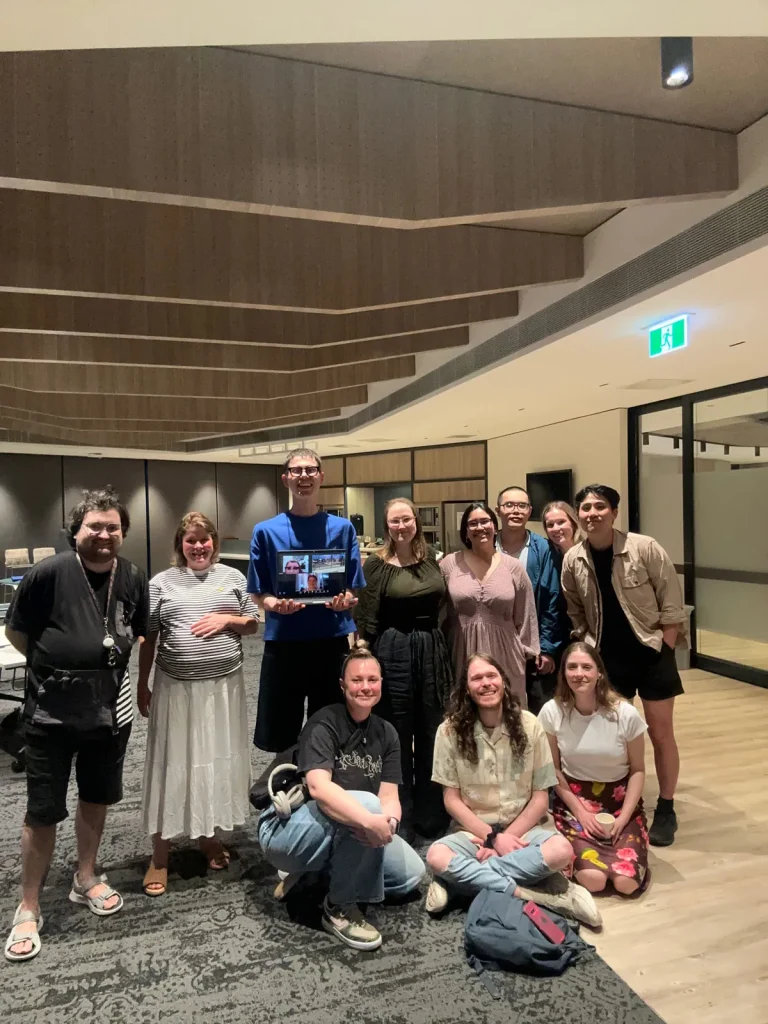


Lived Experience Researchers
Lived experience researchers are paid members of our team who play active roles in leading, shaping, and delivering research. While they bring lived experience of mental ill-health to their work, their roles extend beyond lived experience expertise alone.
The lived experience team contribute across all aspects of research projects. They work as researchers first and foremost, applying a range of skills and methods, with lived experience informing their perspective rather than defining the limits of their role.
They also support capacity building across the team and broader research environment. This includes strengthening co-design practices, supporting safe and inclusive research processes, mentoring and supporting young people involved in research, and helping teams reflect on power, language, and accessibility.
Our lived experience researchers have shared insights from their work through national and international forums, contributing to global knowledge exchange on youth engagement, lived experience leadership, and personalised mental health care.

Zoe Waterhouse-Bushnell shares her journey with our team.
Meet the Lived Experience Researchers
Alexis Hutcheon
Samuel Hockey
Zoe Waterhouse-Bushnell
Tara Tjahjadi
Youth lived experience in policy
Our team is committed to turning research into practice and driving systematic change. The voice of young people with lived experience is essential in driving higher level change. This includes influencing how organisations make decisions for youth mental health, all the way up to government policy – that is, the decisions that shape how mental health services are funded, organised, and delivered.
Mental health policy decisions can be informed by a multitude of factors including research, data, individual expertise, or political factors. However, the inclusion of lived experience perspectives remains overlooked. Insight into the experiences and challenges of young people navigating the mental health system provides a crucial perspective to ensure decisions are made with a true understanding of what it is like for young people ‘on the ground’.
Hear from young people, where they live
Importantly, young people’s insights will vary region to region across Australia. The needs and experiences of young people living in an urban area will likely be very different to a young person living in a rural or remote area. We need to hear from young people in their own communities, to ensure that decision-making meets their unique needs.
“Make sure that you keep it co-designed with young people… like someone who knows their local community, who has lived experience from where they’re at, be a part of it.”
– Young person with lived experience
By consistently advocating for youth lived experience voices, the message is gaining traction at a higher level. We have heard directly from mental health funding bodies and organisations about the real impact a strong youth voice has had on how they approach their work, and how they might embed youth lived experience voices into their processes moving forward.
“I’ve worked with adults with lived experience as part of projects and part of consultation program reviews. But I’d never worked with young people in that capacity … It reminded me that young people have a voice, they want to say something, and they are going to take the actions, even if it is putting themselves out of their comfort zones to do something different. It reminded me that we need to be less rigid around how we see engagement, and we need to have a lot more faith and trust in young people.”
– Mental health funding body
As part of a large national research program that aims to ensure young people receive the right mental health care at the right time (‘Right Care, First Time, Where You Live’), we have partnered with an inspiring group of young people with lived experience that represent diverse regions across Australia. Known as the National Reference Group, these young people work closely with our team to ensure youth voices are integrated into not only research, but policy decisions too.
The National Reference Group have developed the Advocacy Toolkit for Young People. This resource provides further information about using your voice to advocate to decision makers, and some example resources to get you started.
Meet the academic leadership team
Each of our academic team leads brings their own expertise, passion and creativity to our shared mission of improving young people’s mental health.
Ian Hickie
Pronouns: He/Him
Professor Hickie has led major public health and health services developments in Australia, particularly focusing on early intervention for young people with depression, suicidal thoughts and behaviours and complex mood disorders. He is active in the development through codesign, implementation and continuous evaluation of new health information and personal monitoring technologies to drive highly-personalized and measurement-based care.
Liz Scott
Associate Professor Scott specialises in youth mood disorders, youth mental health service development, and the impact of sleep and circadian dysfunctionShe has extensive experience in developing and evaluating comprehensive assessment and management programs for young people with mental health problems through her work with the Brain and Mind Centre as well as headspace programs in Central and Eastern Sydney.
Frank Iorfino
Pronouns: He/Him
Dr Frank Iorfino is a researcher passionate about improving youth mental health and wellbeing. His work explores how digital tools can help us better understand, predict and treat mental health problems. He collaborates with industry, lived experience experts and health services to design and evaluate personalised solutions that support early intervention and drive meaningful behaviour change, shaping the future of youth mental health care. When he isn't working, you'll find him running, swimming, or reading about history.
Haley LaMonica
Pronouns: She/Her
Dr Haley LaMonica's research focuses on the co-design of digital mental health technologies in collaboration with young people and clinicians to ensure they are easy to use, genuinely helpful and empower young people to have a real voice in their care. Haley's goal is to help young people and clinicians make decisions together about what works best. Haley also has the pleasure of co-leading our team's Lived Experience Working Group. When she's not working, Haley loves travelling, discovering new foods, and soaking up the sun at the beach.
Jake Crouse
Pronouns: He/Him
Dr Jake Crouse is passionate about improving outcomes for people living with mental health conditions, and depression and bipolar disorder in particular. As a life-long sleep walker and sleep talker, Jake has always been curious about how our sleep and circadian rhythms (body clocks) shape our mental health. He uses tools from genetics, biology and wearables to probe this question. He's happiest at the beach with a good book and an ice-cold coffee.
Keen to learn more about the team and our work?